
1.0 The Statement
We, the End-Times-Generation is living in “the Perilous Times” (2Timothy 3:1), characterised by People who are: “Lovers of Themselves; Lovers of Money; and Lovers of Pleasure” (2Timothy 3:2, 4), with little respect for Authority (“Disobedient to Parents, unthankful and unholy” – 2Timothy 3:2b), and with no reverential Fear of the LORD (God).
God’s Word teaches that we are to: “Obey those who rule over us, and be submissive, for they (Leaders) watch out for our souls, as those who must give account (to God). Let them (the Leaders) do so with joy and not with grief, for that would be unprofitable to us” (Hebrews 13:17).
It is important to teach the Members of the Church and our Children to honour and be submissive to Authority (Home, Office, State {Country}, Church, etc); in so doing, we create an environment that our Children learned to have Reverential Fear of the LORD (God), for their benefits:
- Job 28:28b “Behold, the Fear of the LORD, that is wisdom, and to depart from evil is understanding.”
- Psalm 111:10 “The Fear of the LORD is the beginning of wisdom; a good understanding has all those who do His commandments. His praise endures forever.”
The Reverential Fear of the LORD (God) always begins with the Individual Believer respect for Authority (Home, Office, State {Country}, Church, etc). Thus, the Individual Believer respect for Authority (Home, Office, State {Country}, Church, etc) is never divorced from the Reverential Fear of the LORD (God).
The Success of the “Home, Office, State {Country}, Church, etc” is closely associated with the teaching of our Children on the respect of Authority and the Reverential Fear of the LORD (God). No single aspect of the Christian walk carries with it greater of God’s Promise of blessings than the Individual Believer who walks in Reverential Fear of the LORD (God):
- Job 28:28b “Behold, the Fear of the LORD, that is Wisdom, and to depart from evil is understanding.”
- Psalm 111:10 “The Fear of the LORD is the beginning of Wisdom; a good understanding has all those who do His commandments. His praise endures forever.”
1.1 Definition
The Reverential Fear of the LORD (God) is defined as: “An awesome reverence and respect towards God, knowing that God is Merciful, and Gracious, Long-suffering, and full of Compassion, abounding in Goodness and Truth.” (Exodus 33:19 & Exodus 34:6; etc).
1.2 Early Church
Reverential Fear of the LORD (God) was part of the Life of the Early Church – Acts 2:40-43 “And with many other words he (Peter) testified and exhorted them, saying, ‘Be saved from this preserve generation. Then those who gladly received his word were baptised; and that day about three thousand souls were added to them. And they continued steadfastly in the apostles’ doctrine (teaching) and fellowship, in the breaking of bread and in prayers. And fear came upon every soul, and many wonders and signs were done through the Apostles.’”
- Acts 5:11 “So great fear came upon all the Church and upon all who heard these things.” God’s Judgement on Ananias and Sapphira caused the People to have a healthy Reverential Fear for God.
- Acts 9:31 “Then had the Churches rest throughout all Judea and Galilee and Samaria and were edified; and walking in the fear of the LORD, and in the comfort of the Holy Spirit, were multiplied.”
The Early Church has Five basic features: The Church was at Rest and the Church was edified and multiplied because the Early Church walked in the Reverential Fear of the LORD (God) and in the Comfort of God’s Spirit. George Barna Research Group released survey results, involving 12 largest Denominations in USA: Only 41% could be classified as “born-again.” Of all the adults surveyed, 41% believed that the Bible was completely accurate. Only 40% believed that Jesus Christ lived a sinless life, while incredibly, only 27% believed Satan was a real being. The survey indicates an alarming situation because these statistics were gathered among Professing Christians and not among the unchurched people. Thus, the End-Times-Generation is drifting from the Anchor of Biblical Truth and the Reverential Fear of the LORD (God).
1.3 Lawlessness
God’s Word warns that in the Last Day, “And because lawlessness will abound, the love (agape-love) of many will grow cold.” (Matthew 24:12). Lawlessness is found in Lucifer (later called: “Satan”) – Ezekiel 28:15, “You were perfect in your ways from the day you were created, till iniquity (lawlessness) was found in you…..You defiled your sanctuaries by the multitude of your iniquities (lawlessness), by your iniquities (lawlessness) of your trading (rakil – tale-bearing);…..” Thus, the “Mystery of Lawlessness” has its origin in Lucifer (Satan); and would come to its full-manifestation in the Lawless One (Antichrist) – 2Thessalonians 2:7-9 “For the mystery of lawlessness is already at work;……And then the Lawless One will be revealed,……The coming of the Lawless One is according to the working of Satan, with all power, signs and lying wonders.” Where there is lawlessness there is no respect and submission to authority (in home, Church, and State, etc), and correspondingly no Reverential Fear of the LORD (God). This outworking of Satan is to ensnare and to destroy the Individual Believer and the Church. The Individual Believer or the Church who does not have Reverential Fear of the LORD (God), he (and the Church) would not be fruitful Christian
1.4 What is not Reverential Fear?
Reverential Fear of God, in the mind of most people is wrongly concluded, for several reasons:
1.4.1 Natural Fear
We always associate natural fear with Reverential Fear of the LORD (God), which is not correct; even though natural fear is good as it keeps us from doing foolish things. Natural fear, in dangerous situation, is designed for our preservation. There are various types of natural fear, for example:
- Claustrophobia fear of heights.
- Fear of darkness.
- Fear of crowds. Etc.
1.4.2 Demonic Fear
Demonic fear is not Reverential Fear of the LORD (God), because “God has not given us the spirit of fear” (2Timothy 1:7); demonic fear “has torment” (1John 4:18).
1.4.3 Religious Fear
Religious fear is not Reverential Fear of the LORD (God) – because “We have not received the spirit of bondage again to fear.” (Romans 8:15). Religious fear is defined in Isaiah 29:13 “Forasmuch as this people draw near Me with their mouth, and with their lips do honour Me, but have removed their heart far from Me, and their fear toward Me is taught by the precept of men.” The Individual Believer with religious fear is shown in 2Timothy 3:5a “Having a form of godliness but denying its power.” Legalism underpinned religious fear.
1.4.4 Fear of Man
Fear of man is not Reverential Fear of the LORD (God), because “the fear of man brings a snare” (Proverbs 29:25). Many people fear men more than the Reverential Fear the LORD (God) – they allowed the faces of men to cause them to be withdrawn and thus, causing them to lose their confidence in God.
1.4.5 Not to Fear other gods
Although God’s Word teaches that we should not fear idols or other gods, nevertheless, we should not be disrespectful of others’ religions – 2Kings 17:38 “And the Covenant that I have made with you shall not forget; neither shall you fear other gods.”
1.4.6 Not to Fear Calamities
We are not to fear earthly calamities for they signify the near Return of Jesus – Luke 21:25-28 “….men’s hearts failing them for fear….then look up…..”
1.4.7 Not to Fear “Fear”
We are not to fear “Fear,” – Job 15:24 “Trouble and anguish shall make him (the unsaved) afraid,” but the Believer casts all his earthly fears on the Lord Jesus Christ (1Peter 5:7).
The Basic Principle – Whatever an Individual fear the most, he will worship. And if he fears nothing, the tendency is that it would end up in self-worship, because of pride – Pride focuses on self and is a form of “self-worship” Colossians 2:23b (NIV) “Self-imposed worship with false humility.” Thus, David Prayed: “Unite my heart to fear Your Name” (Psalm 86:11).
1.5 Commanded
The Fear of the LORD is commanded – Deuteronomy 13:4 “You shall walk after the LORD your God, and Fear Him, and Keep His Commandments, and Obey His Voice, and you shall Serve Him, and Cleave unto Him.”
- 1Peter 2:17 “Honour all men. Love the brotherhood. Fear God. Honour King.”
- Psalm 22:23 “You that Fear the LORD, praise Him….Glorify Him; and Fear Him.”
Christ’s early Disciples set up a noble example in this matter – Acts 9:31”….and walking in the Fear of the LORD….were multiplied.” Cornelius was the man who Feared God (Acts 10:2). The Fear of the LORD teaches us to live circumspect lives, “Let us cleanse ourselves from all filthiness of the flesh and spirit, perfecting holiness in the Fear of God.” This Godly Fear becomes a powerful motivating force in our lives.
1.6 Reverential Fear of God
Scripture has significant passages on the Reverential Fear of the LORD (God) with His Promises (Job 28:28; Psalm 111:10; Psalm 19:9; Psalm 25:12-14; Proverbs 10:27; Psalm 34:11-15; Proverbs 19:23; Proverbs 22:4; Proverbs 23:17-18; etc). Reverential Fear of the LORD (God) is not religious, legalistic attitude towards God. Of the Sevenfold Nature of the Spirit of the LORD (Isaiah 11:1-3), that rested on Christ, the last aspect is “The Spirit of the Fear of the LORD,” is emphasized, twice, and is the chief characteristic of Christ – He (Christ) has Reverential Fear of God, His Father.
The Fear of the LORD (Isaiah 11:3a) – “The Spirit of the Fear of the LORD,” is, the deep tap-root of the Jesus’ Character: Fear (Reverence) of God, becoming humble and obedience unto death of the Cross – Philippians 2:6-8 (NIV) “Who (Jesus), being in very nature God, did not consider equality with God something to be grasped, but made Himself nothing, taking the very nature of a Servant, being made in human likeness. And being found in appearance as a man, He humbled Himself and became obedient to death – even death on a cross!” In fact, “the Spirit of the Fear of the LORD” is of such far-reaching importance that an explanatory clause is appended to indicate its fundamental importance, – “And His delight (“quick understanding”- KJV) shall be in the Fear of the LORD” (Isaiah 11:3a, NIV).
The term “delight” (NIV) carries the implication that “the Fear of the LORD” is fragrant to Jesus, that is, all of Jesus’ desires and actions are in total submission to the Father’s Will:
- Hebrews 10:6-7b (KJV) “In burnt offerings and sacrifices for sin Thou hast had no pleasure…….Lo, I come (in the volume of the book it is written of Me) to do Thy will, O God.”
- Hebrews 10:8b-9b (KJV) “Sacrifice, and offering and burnt offerings, and offering for sin Thou wouldest not, neither hadst pleasure in them, which are offered by the law,…….Lo, I come to do Thy will, O God.”
Such yielding of His (Jesus’) Own Will to the Father’s Will is not burdensome and unpleasant to Jesus, but rather a sheer “delight.” The verb used implies that this attribute constitutes the very purpose that Jesus came.

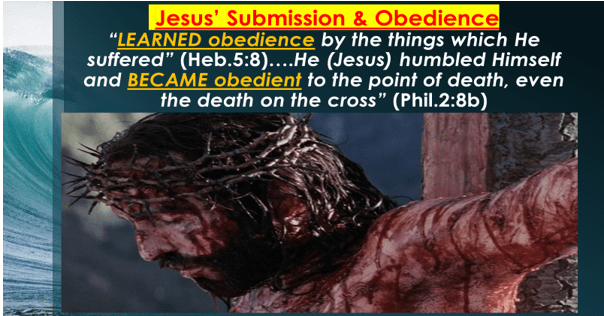
In studying the life of our Lord Jesus Christ, He consistently claimed that “The Son can do nothing of Himself, but what He seeth the Father does; for what things so ever he doeth these also doeth the Son likewise” (John 5:19, KJV). Jesus is totally submitted and dependent on His Father:
- Luke 22:42 “Not My will, but Thine, be done.”
- John 4:34 “My meat is to do the will of Him (Father) that sent Me, and to finish His work.”
- Hebrews 10:6-7b (KJV) “In burnt offerings and sacrifices for sin Thou hast had no pleasure…….Lo, I come (in the volume of the book it is written of Me) to do Thy will, O God.”
- Hebrews 10:8b-9b (KJV) “Sacrifice, and offering and burnt offerings, and offering for sin Thou wouldest not, neither hadst pleasure in them, which are offered by the law,…….Lo, I come to do Thy will, O God.”
 Morning Dew . Life