Wise and foolish words are one of the main themes in the Book of Proverbs. It receives further treatment in Proverbs chapter 18. It surveys the differing uses of tongue and their consequences:
A Foolish Person
Proverbs 18:2 (NIV) “A fool finds no pleasure in understanding but delights in airing his own opinions.” A person who “delights in airing his own opinions” can appear knowledgeable, wise, and even gain a great following, but he lacks understanding.”
This is because he cannot be bothered to go thoroughly into the matters on which he expresses his opinion – Proverbs 18:15 (NIV) “The heart of the discerning acquires knowledge the ears of the wise seek it out.”
This is too much trouble and he “finds no pleasure in it” (Proverbs 18:2a, NIV). After all, if he does, he may discover he was wrong and have to eat his words, which the self-opinionated will never do.
He must be different in order to draw attention to himself. It is important for us to check our opinions against those of others and gleamed wisdom from interaction.
Foolish Person cannot be taught; he is critical and is in a danger of forming his clique.
Self-Opinionated Person
A “Self-Opinionated” – Proverbs 18:6-7 (NIV) “A fool’s lips bring him strife, and his mouth invites a beating. A fool’s mouth is his undoing, and his lips are a snare to his soul.” Self-opinionated Fool is trapped by his own words because he provokes disagreement, which leads to strife, but being a controversialist he enjoys this – Proverbs 18:20 (NIV) “From the fruit of his mouth a man’s stomach is filled; with the harvest from his lips he is satisfied.” However, provocative words can lead to blows: “His mouth invites a beating” (Proverbs 14:3). He may get the best of argument, but he comes off worse off because “his mouth is his undoing,” literally “ruin, destruction.” This may mean he is such a well-known nuisance that no person will take his part and he may be brought before for punishment – Proverbs 19:19 (NIV) “A hot-tempered man must pay the penalty; if you rescue him, you will have to do it again.” Whichever it is he has only himself to blame. No person sets out to get him, he himself laid the snare which brings “ruin” (“undoing”) to himself:
Proverbs 10:8b (NIV) “A chattering fool comes to ruin.”
Proverbs 12:13a (NIV) “An evil man is trapped by his sinful talk.”
Proverbs 13:3b (NIV) “He who speaks rashly will come to ruin.”
James put it in a nutshell: “What a great forest is set on fire by a small spark” (James 3:5). Ecclesiastes 10:12b (NIV) “A fool is consumed by his own lips.”
Proverbs 20:3 (NIV) “It is to a man’s honour to avoid strife, but every fool is quick to quarrel.” Proverbs 20:3 (KJV) “It is an honour for a man to cease from strife, but every fool will be meddling.”
Quarrelling is one of the commonest human weaknesses and has the most serious effects; it marks one of the clearest differences between Wise and Foolish Person. Every Foolish Person is quick to quarrel because the Person is “quick-tempered” and lacks understanding:
Proverbs 14:29 (NIV) “A patient man has great understanding, but a quick-tempered man displays folly (foolishness).”
Proverbs 16:32 (NIV) “Better is a patient man than a warrior, a man who controls his temper than one who takes a city.”
Proverbs 17:14 (NIV) “Starting a quarrel is like breaching a dam; so, drop the matter before a dispute breaks out.”
Proverbs 19:11 (NIV) “A man’s wisdom gives him patience; it is to his glory to overlook an offense.”
It is honourable for the Person to avoid (“cease from” – KJV) strife. The phrase “ceased from” (KJV) means “a complete separation from strife.” The word “avoid” (NIV – “cease from” – KJV) has the idea of sitting still, remaining calm under a hail of insults. The world sees this as weakness and dishonour (James 3:14-16). But, as Bridges puts it, “An evil world is a fine theatre for the display of the Grace of God in the fruits of ‘the wisdom that is from above,’ that is, Peaceableness” (James 3:17). It takes far more strength to control your temper than to stand up for your right.
Strife begins when honour is impugned (call in question, challenged) and must be defended, however, honour does not come from defending it, but controlling oneself and forgiving the injury – Proverbs 19:11 (NIV) “A man’s wisdom gives him patience; it is to his glory to overlook an offense.”
The Wise Person does not get entangled with the petty grievances that often characterize life. This does not mean that the Wise Person will completely avoid addressing an issue when Principle is involved. However, the Wise Person will not get involve with the many neutral matters that give ground for quarrelling and irritation. In contrast, the Foolish Person “will be meddling” (“starts a quarrel” – Proverbs 20:3), because his lack of self-control leads him to focus on matters that would be best forgotten.
It is amusing that God puts Proverbs 18:21 “Death and life are in the power of the tongue: and they that love it shall eat the fruit thereof” and Proverbs 18:22 “Whosoever findeth a wife fineth a good thing, and obtaineth favour of the Lord” side by side in the Word of God. The tongue is used when the man proposes to the girl. He asks her to marry him, and that is the proper way for it to be done; and death and life are in the power of the tongue. It is like the story of the old bachelor who had never met a woman whom he wanted to marry because he thought they all talked too much. He found what society, using an unkind word, called an old maid, one who seemed very quiet. He fell in love with her and asked her to marry him. The minute she accepted the proposal, she started talking. She talked about where they would go and how they would fix their house and on and on. Suddenly after an hour or so she realised that she was doing all the talking and that he was quiet. “Why don’t you say something?” she asked. He answered, I’ve said too much already!” – I have proposed! – Proverbs 18:22 “Whosoever findeth a wife fineth a good thing, and obtaineth favour of the Lord.”
From the Lord
Proverbs 19:14 “House and riches are the inheritance of fathers: and a prudent wife is from the Lord” (KJV). – Any man, worthy or not, may inherit the property from Progenitors; any man may bargain for a wife, or give a dowry to his son to further his matrimonial prospects. But a prudent wife is a gift of God, a proof of His gracious care for His people (Proverbs 18:22). Septuagint states: “It is by the Lord that a man is matched with a woman.” There is a special Providence that watches over wedlock (Malachi 2:13-17); as we say, “Marriages are made in Heaven.” But marriages of convenience, marriage made in consideration of worldly means, are a mere earthly arrangement, and cannot claim God’s Grace.
A prudent wife is from the LORD is emphatic. It implies that this gift is beyond both comparison and contriving. A good wife is necessary for the establishment of a happy home. She is not acquired, however, as are other possessions which may be worked for or inherited. She is always to be treasured as a Gift from The LORD.
The account of Ruth’s life beautifully illustrates God’s Providence in the Marriage. The Moabites married, contrary to all expectation, of that times, an Israelite. In this way she was brought into Naomi’s family. She had returned with Naomi to her (Naomi’s) land and then came to the attention of Boaz, who became Ruth’s husband. Often the wheels of the LORD’s working in this interesting matter constrain the admiration of men who are not used to observing spiritual matters (Genesis 24:50). And how much more endearing and secure is the Special Gift of God! – A Wife! Thus, a prudent wife is honoured as “a special blessing of God’s immediate choosing, and therefore to be obtained by our prayers at the hand of the Giver” (Bishop Hall).
Husband’s Crown
Proverbs 12:4a“A virtuous woman is a crown to her husband.” A virtuous woman one whose portrait is beautifully traced in Proverbs 31:10-31. The term is applied to Ruth (Ruth 3:11). The Vulgate renders “diligent.” Virtuous (hayil), when relating to men, especially soldiers, means “strength.” Referring to a wife, it designates the womanly virtues, effectualness in the home and nobility of character, viz:
Graciousness – Proverbs 11:16 “A gracious woman retaineth honour, and strong men retain riches.” The comparison intimates that what strength is to man in maintaining his wealth, grace is to woman for securing her position and influence. This is a “finger-post,” directing woman in her weakness to the place where her great strength lies. The winsome will win her way. The adaptation of the feminine character to be the companion and complement of man is one of the best-defined examples of that designing wisdom which pervades Creation.
Wisdom – Proverbs 14:1 “Ever wise woman buildeth her house, but the foolish plucketh it down with her hands.”
Virtuous – The root idea of strength and worth. The modern phrase, “she has a lot in her,” expresses something of the meaning.
The expression means one of power either in mind or body, or both. The same idea is contained in the virtue. Such woman is not simply loving and modest and loyal but is a crown to her husband; is an honour to him, adorns and beautifies his life, making, as it were, a joyous festival. Paul (1Thessalonians 2:19) calls his converts “a crown of glorying.” She delights in seeing her husband honoured, respected, and loved; prudent in the management of her family (Proverbs 31:10-31). She is immovable in affection (Titus 2:4); Conscientious in the carrying out of her domestic responsibilities (Proverbs 31:27-28); kind and considerate to all around her (Proverbs 31:20, 26), and as the root of all, Fearing the LORD (Proverbs 31:30). She is not the ring on her husband’s finger, or the chain of gold around his neck. That is far too low. She is his crown; his brightest ornament; drawing the eyes of all upon him, as eminently honoured and blessed – Proverbs 31:23 “Her husband is known in the gates, (place of honour in the city), when he sitteth among the elders of the land.” Her husband is honoured because of her.
The allusion is to the crown worn by the bridegroom at his marriage, or to the garlands worn at feasts. The Sons of the Sirach has much praise for the virtuous woman: “Blessed is the man that hath a good wife, for the number of his days shall be double. A virtuous woman rejoices her husband, and he shall fulfil their years of his life in peace” (Ecclus 26:1-2).
The virtuous wife is an important influence in the happiness in the home. The word is literally “a woman of power (character-positive aspect), and the idea of force lies in the word and idea of virtue (asset). Her moral character and influence make itself felt in all the life of her household. She is her husbands’ glory and pride. The central figure in wisdom’s home is the virtuous woman. She is possessed with a moral power that manifests itself in her godly character and domestic activity. The crown, or garland, is an emblem of renown. She bestows honour upon her husband!!! – Proverbs 18:22 “Whosoever findeth a wife fineth a good thing, and obtaineth favour of the Lord.” & Proverbs 19:14 “House and riches are the inheritance of fathers: and a prudent wife is from the LORD.”
The wife is not the counterpart of the husband, but the complement. Human nature is completed in the union of the man and his wife. Therefore, it is not the part of the women to imitate men, nor is inferiority to be assigned to women because they differ from men. The rich, full, perfect human life is attained by the blending and not the competing of differences.
Happy Home
No life can be more beautiful than that of the happy home. The serious question is how it shall be realised:
The LORD First – Marriage must be ratified in heaven (Malachi 2:13-17). Its happiness may be wrecked on so many hidden rocks that it is not safe to venture on to the unknown sea without the assurance that God is in the marriage and is guiding the voyage.
Adaptation – Every woman is not suitable for every man. Hasty courtships may lead to miserable marriages. So serious a matter as the choice of companion for life is not to be lightly undertaken it there is to be any hope of its issuing in happiness.
Mutual Confidence – There must be mutual confidence between husband and wife if the marriage is to be one of true and lasting blessedness. Whatever be their position in the social scale, it is possible for conceding the fullest mutual confidence.
• Self-Sacrifice – Selfishness is fatal to marriage. Love must learn to give, to suffer, to endure. The happiness is most complete when each seeks it chiefly for the other. Ogden Nash gave advise on how to make marriage a success in a little poem that he wrote:
To keep your marriage brimming With love in the loving cup Whenever you’re wrong, admit it; Whenever you’re right shut up.
Good Thing
Proverbs 18:22 (KJV) “Whosoever findeth a wife fineth a good thing, and obtaineth favour of the Lord.” What is good implies godliness. Godliness is found when the man marries in the Lord and one who is the Lord.” Manoah found a good thing in his wife (Judges 13:23). A Writer comments: “that Manoah could speak so loud that all our Israelites could hear him, about the goodness of his wife.” The “good thing” is:
When the husband honours her, not as the wisest or the holiest of women, but as the person, whom God sees to be the best and fittest for him. She becomes his object of his undivided heart – “One flesh” (Genesis 2:24).
Mutual faith is plighted in the Lord Jesus. Such a communion acknowledges His (God’s) affections and elevates Him (God) from earth to heaven.
As an answered to prayer (Genesis 24) – “Choose thou mine inheritance for me” (Psalm 47:4) – is the cry and confidence of the child of God. Then assuredly, he will receive the wife, not as a result of good fortune, or as the proof of his own good discernment; but, as Adam received his wife, “from the LORD,” a token of God’s favour.
The good thing is displayed in her skill in the management of domestic affairs – Proverbs 31:11-12“The heart of her husband doth safely trust in her, so that he shall have no need of spoil. She will do him good, and not evil, all the days of her life.” – Their financial affairs (Proverbs 31:13-22). She is loved and appreciated by her husband and her children (Proverbs 31:28).
The good sense that makes her an agreeable Partner and directs her to that kind of attitude which makes her husband happy (blessed) in this connection. To these qualities, if piety be added, it renders her a far greater blessing (favour) than any possessions that husband can obtain. We are to thank God for every outward enjoyment, but chiefly for those in which His favourable providence is most plainly shown in the person of a wife. A wife is a rich present from God her husband is bound to show her all that respect and kindness which God requires. Whatever character a wife deserves, God commands her husband to love her, but when a wife is prudent, the husband would be inexcusable who do not love her with the tender affection.
Proverbs 18:22 ““Whosoever findeth a wife fineth a good thing, and obtaineth favour of the Lord,” the wording, especially in the Hebrews, strikingly resembles that of Proverbs 8:35 “Whosoever findeth Me (God) findeth life, and shall obtain favour of the Lord,” and so suggests that after wisdom itself, the best of God’s blessing is a good wife. Proverbs 31:10 makes a similar comparison, putting her price, like wisdom (Proverbs 8:11), above rubies. Good = literally, “a boon (benefit).”
If a man desires to have a wife, he must acknowledge God by earnest supplications; for He alone know the hearts of men and women and exercises a Sovereign influence over their affections. God declares that a prudent wife is a far richer gift than those things which are so much valued by the generality of men (Proverbs 31:10).
The Creation of woman is ascribed to the need of this “And the Lord God said, it is not good that the man should be alone” (Genesis 2:18). In a marriage a man’s wife is his best friend. Fellowship of soul makes the union more than a mere contract of external relationship. Now, this fellowship is greatly needed for solace amid the cares of life, and strength to face its difficulties. The wife is able to give it to her husband, and the husband to his wife, as no persons in the outer circle of social relationship can hope to offer it.
Mutual Helpfulness
In the narrative of the Creation, God says, concerning Adam, “I will make him a help meet for him” (Genesis 2:18). The wife who understands the Christian calling will aim at ministering to her husband in all ways of helpfulness that are within her power, but chiefly in helping his walks with God and the duty of her husband towards the wife will be similar.
Help – The word for “help” (exer) is used for both help and helper. It is used nineteen times in the Old Testament and fourteen times it alludes to God as our Help (Helper – Psalm 70:5). The word means: “surrounding, defending, girding, helping, succouring.” Man must have a help meet (wife), one sufficient for him, not an inferior aid, for this word “help,” as we have seen, is used fourteen times of God.
Meet – The word for “meet” (neged) means the front part, the front, or over against, opposite to each other, those who answer to each other (accountability), who are alike. Placed before Adam, his wife in whom he could recognise his own likeness, his reflected image, one who would correspond to him in every way, succouring and aiding, entirely identified with him. The Syriac translation is “a help similar to him.”
Rib(Tsela), translated “rib” in Genesis 2:21, 22, in the plural is translated beams (as in the ribs of building). It is used of a side of a man, or inanimate things such as the tabernacle, altar, side chambers, cells of the temple, of the whole of that part of the temple comprising three stories (Ezekiel 41:5, 9, 11; Ezekiel 41:9), it is word used for space between the two walls of the temple, intended for these chambers. This is the reason, no doubt, why the Septuagint used the Greek word “pleura,” the lining membrane surrounding the ribs, lungs and heart. The rendering “rib” has its origin in the rabbinical writings. How could Adam says, “bone of my bones, and flesh of my flesh” if only a little bone such as a rib had been taken from him?”
What Adam needed was God’s Creation after his own kind. We read that God took one of Adam’s ribs and from this rib made, a woman. When the Hebrews word “tsela” is translated rib it conveys a more limited idea than the Hebrew original. The word is never translated “rib” except in the Genesis account, but always “side,” or “flank.”
This is the true meaning also of the Latin word by which it is rendered in the Vulgate costa as shown in the French côte and our coast…….Woman was not framed out of one of Adam’s many ribs, of which he would not feel the lost. She is one side of man; and though he may have several sides to his nature and character, yet without woman one integral portion of him is wanting.
Closed up the flesh instead thereof, literally, “closed up the flesh under it,” that is, in its place. This does not mean that man now has flesh where before he had this “side,” but that a cavity was prevented by the drawing of the flesh on the two edges close together, Metaphysically it means that man has no compensation for what was abstracted from him, except in the woman, who is the one side of his nature which he has lost;……She is something which he once had, but has lost, and while for Adam there is simply the closing of the cavity, the woman is moulded and refashioned and built up into man’s counterpart. She brings back more than the man parted with, and the Creator Himself leads her by the hand to her husband. Note the following comments:
Porter – “Man when alone is incomplete” (Porter, Dr. Footnote Kitto, J.: Daily Bible Illustration, Morning Series, p.172).
Matthew Henry – “The woman was not made out of his head to top him, nor out of his feet to be trampled upon by him, but out of his side to be equal with him.” (Matthew Henry: An Exposition of the Old and New Testament {London, Frederick Westley & A. H. Davis} 1836, Vol.1, p.12, note 4).
Otto Von Gerlach – “In the case of the animals, both sexes could be created side by side; in the case of man, however, where marriage is intended to be a communion of soul in the service of God – where the education and training of the fruits of marriage for God’s service and kingdom, the ordering and governance of the house and of the earth, formed a main part of the task imposed – there must be the origin of the woman to point to the indissoluble union by which two persons become one until their life’s end. The woman taken out of the man (and out of that part of him which lay nearest to his heart), in order to show that this union of soul in love extended to the unity of the flesh likewise – embraced all…….and was indissoluble.” (Ott Von Gerlach: Commentary on the Pentateuch (Edinburgh, T & T Clark), 1860, p.56).
Bishop Wordworth – He describes Eve as: “a helpmate exactly adapted to his moral and spiritual nature; literally ‘a help as over against him, before him,’ so as to ‘meet’ him, fully and ‘correspond’ to him as his counterpart…….” (Wordworth, Chr.: The Holy Bible with Notes and Introductions {Lond, Rivingtons}, 1880, Vol,1. P.17).
It was God who, with what He took from man, made literally built and created, woman (Genesis 2:22). The outcome of God’s creative act was marriage and the fruit of that union, the family. Woman was not made out of the dust of the ground, as Adam was, but by a separate, creative act which has no parallel in history. Matthew Henry commented: “Man being made last of the creatures, as the best and most excellent of all, Eve’s being made after Adam, and out of him, puts an honour upon that sex, as the glory of the man (1Corinthians 11:7). If man is the head, she is the crown; a crown to be husband, the crown of the visible creation. The man was dust refined, but the woman was dust double-refined, one removes further from the earth.”
Proverbs 18:22 “Whosoever findeth a wife fineth a good thing, and obtaineth favour of the Lord.” & Proverbs 19:14 “House and riches are the inheritance of fathers: and a prudent wife is from the LORD.”
Wife-Place
Woman’s place is important; God has made it so and made her fit for filling it. Man is incomplete without her there is a vacuum about him which she alone can fill. It is here that her great strength lies. When she assumes an independent or rival place, she mistakes her mission and her power.
Man, though made for the throne of the world, was found unfit for the final investiture until he got his wife as a help meet. She became the completion of his capacity and title – she becomes his crown – Proverbs 12:4a “A virtuous woman is a crown to her husband.” Wife should find her place that God has given her; let her be what He made her necessary to husband, and not attempt to make herself independent of her husband. When the relations of Husband and wife move in fittings of truth and love, the working of the complicated machinery of life is a wonder to an observing husband, and a glory of the Creator God.
Septuagint – A good wife is meant (as the Septuagint has it), a virtuous, prudent helpmate, as in Proverbs 12:4a “A virtuous woman is a crown to her husband” – Fineth grace = viz peace, union, plenty, order. “And obtaineth favour (good will) of the LORD” = as shown by the companion (consort) whom God has given him. Favour is rendered by the Septuagint as “cheerfulness,” “joyousness” (Proverbs 19:12b “King’s favour ……like dew upon the grass”).
Ecclus xxvi.1“Blessed is the man that hath a good wife, for the number of his days shall be double.” “A virtuous woman rejoiceth her husband, and he shall fulfil the years of his life in peace. A good wife is a good portion which shall be given in the portion of them that fear the LORD.
Talmud – “A good wife, says the Talmud, “is a good gift; she shall be given to a man that feareth God.”
(Dukes, p.69) And again, “God did not make woman from a man’s head that she should rule over him; nor from his feet, that she should not be his slave; but from his side, that she should be near his heart”
Latin – “He who casteth away a good wife casteth away a good thing (cheerfulness, joyousness – Septuagint; Proverbs 19:12b “King’s favour……like dew upon the grass”).
Parallel Bible Commentary – “A good wife is a gift from Yahweh (Jehovah). It is not blind chance that brings such a blessed union. She is one of the highest expressions of the LORD’s favour.”
The blessedness of finding a wife – The Bible does not regard marriage as “a failure,” nor does it treat celibacy as a saintly condition. Even Paul, the Apostle, who does not seem to have been a married man, and who is thought by some to undervalue marriage, gives to it a eulogium is describing the union of husband and wife as a copy of the mystical union of Christ and His Church (Ephesians 5:22-32):
Proverbs 30:28 “The lizard taketh hold with her hands, and as in kings’ palaces.” The KJV & NKJV describes the insect as “Spider,” whereas the NIV describes the creature as Lizard. The insect’s or the animal’s identity is not clear, and thus, for this write-out, we will apply the description to that of the Lizard, instead of Spider.
Lizard’s Limitation
Lizard is defenceless except for its speed. The defenceless characteristic is also descriptive of: “Ants, Coney (Badger) and Locust.” Lizard, is not appealing in appearance and not desirable of many people to take-hold-off, and seem to be a pest to most people – these characteristics would have cause many people to be discouraged, but not the Lizard – where does the Lizard turn up….King’s Palace! (Proverbs 30:28). Lizard is found in the King’s Palace, not by invitation, but persistent and ever persevering!
Wisdom in Action
Lizard speaks of the “Victory of Perseverance,” that compensate for the defencelessness that the Lizard possesses. Despised the Lizard may be, but it is full of wonders. Consider the ingenuity, delicacy, and adaptation of its work; it is truly marvellous. Despite its ease of capture, this animal uses its climbing ability to go everywhere, even on the walls of the King’s Palace. Lizard surefooted tenacity and sneaky persistence testify to the veracity (truth) of this Proverb. Lizard gets into the best place and holds on.
So humble, yet so busy, that it finds room even in King’s Palace. Lizard is found in King’s Palace because it can stick to the walls, and so run into unlooked-for-places out of the way of men. It is a great thing to be able to hold on. Quiet perseverance wins many a victory. Patient endurance is crowned in the end with glorious success. In the highest things: “He that endures unto the end, the same shall be saved” (Mark 13:13). Lizard demonstrates the success of persistency.
Lessons to be Learned
For the unwelcome Lizard to establish itself in King’s Palace, there is demanded of this twofold virtue. And for our success, we need this also – ambition to attempt and assiduity (assess critically) to find a way, in spite of all the obstacles that we may encounter. The discouraged and faint-hearted will not success – for the Bible exhorts us: “Faint No!” – Hebrews 12:1-3 “Therefore, we also, since we ae surrounded by so great a cloud of witnesses let us lay aside every weight, and the sin which so easily ensnares us, and let us run with endurance the race that is set before us, looking unto Jesus, the Author and Finisher of our faith,……lest we become weary and discouraged in our souls.”
History has shown that even people with limited talents have been known to accomplish great success/discovery far more than those with great talents and abilities, for he that has no heart for enterprise will certainly achieve nothing; and he who lacks patience to wait his time, perseverance to renew his efforts as often as he is foiled, or as often as one success opens the way to another, will reach no King’s Palace, no place of honour or of influence. The Lizard teaches us this precious lesson of wisdom of: “Victory of Perseverance.”
Word of Exhortation
We have spent time together, studying and learning from these four insects/animals: Ants, Coneys (Badgers), Locusts and Lizards, and I hope that these insects/animals (Ants, Coneys {Badgers}, Locusts, and Lizards) have provided us with valuable lessons of life:
The Ants taught us of: “Wisdom of Preparation.”
The Coneys (Badgers) taught us of: “Necessity of Precaution – Three Basics of Survival.”
The Locusts taught us of: “Unity and Power.”
The Lizards taught us of: “Victory of Perseverance.”
All the four mentions insects/animals in Proverbs 30:25-28, are small in sizes and weak in bodies, nevertheless, all are wise enough to find a compensating quality (wisdom) to make them reach their goals.
Proverbs 30:27 “The locusts have no king yet go they forth all of them by bands.” The Locusts speak of “the Mystery of Unity and Power.” The Locusts lack leadership collectively, yet they march in rank. What an amazing exception they are! It is not their work of ruin, but the wisdom of system by which they do it, that is commended in Proverbs 30:27. They have no leader and lack strength, individually, yet work in amazing unity. Locusts demonstrate the Mystery of Unity and Power.
Work of Locusts
The Locusts are known for the immense numbers that suddenly swarm upon a district, and for the vast devastation they accomplish in vegetation in a little while. “Vast bodies of migrating Locusts, called by the oriental the Armies of God,” lay waste the country. The Locusts observed as regular order, when they march, as an army. At evening they descend from their flight, and form, as it were, their camps. In the morning, when the sun has risen considerably, they ascend again, if they do not find food, and fly in the direction of the wind – Proverbs 30:27 “The locusts have no king yet go they forth all of them by bands.”
The Locusts go in immense numbers – Jeremiah 46:23 “They shall cut down her forest, says the LORD, ‘Though it cannot be searched, because they are innumerable and more numerous than grasshoppers.”
Occupy a space of ten or twelve miles in length, and four and five in breadth, and are so deep that the sun cannot penetrate through them; so that they convert the day into night and bring a temporary darkness on the land – Exodus 10:15 “For they covered the face of the whole earth, so that the land was darkened; and they ate every herb of the land and all the fruit of the trees which the hail had left. So there remained nothing green on the trees or on the plants of the field throughout all the land of Egypt.”
The sound of the wings is terrible, when the Locusts descend upon the earth, they cover a vast track a foot and half high; if the air is cold and moist or if they be wet with the dew, they remain….till they are dried and warmed by the sun – Nahum 3:17 “Your commanders are like swarming locusts, and your generals are like great grasshoppers, which camp in the hedges on a cold day; when the sun rises they flee away, and the place where they are I not known.”
Nothing stops them. They fill the ditches which are dug to stop them with their bodies, and extinguish by their numbers the fires, which are kindled. They pass over walls and enter the doors and windows of houses (Joel 2:7-9).
The Locusts devour everything which is green, strip off the bark of trees, and even break them to pieces by their weight (Exodus 10:12-19).
Wisdom in Action
Though the Locusts have no king, yet they are able to make successful marches over miles of country, and to completely devastate the lands they visited. It is an accepted principle, in life/management, that a Leaderless Group is a weak Group. Yet in the Locusts, is an example, or an exception to the rule of life/management; here the Locusts, doing well and survive but has no leadership in command. What is the secret of the Locusts’ success and survival?? How can we see “Wisdom,” in action? – Locusts’ limitations have been overcome by their wisdom:
The Locusts compensate for the lack of the leadership, by means of band together for a common purpose/strength – stripping the land of its vegetation!
Locusts do not waste their time by flying hither and thither, and by opposing one another. Locusts all move on in solid phalanx (group). Each Locust subordinates his individuality to the Group; this is illustrated, when the Locusts come to a small stream, they will move into the stream in such numbers that the Locusts created a causeway of bodies, that can be used by other Locusts. This instinctive order secures success. Thus, the Locusts success is insured by the strength of the total organization, build-up by the strength of the individual insect!
Locust a creature, as an individual, easily crushed, yet gaining immense force by union with others. Joel gives a splendid description of the raid of locusts under the figure of the invading army, with which the accounts of travellers in tropical lands may be closely compared (Joel 1:4). It is an essential part of personal equipment that a man be able to cooperate with others. And in the great majority of cases this means readiness to fall in with the suggestions of other people, to forego our own preference and adopt another person’s advice. It means listening and learning, conciliation and concession, punctuality, and politeness.
Lessons to be Learned
It teaches us that the welfare of the Individual must be subordinates to that of the Community. This speaks of the banding of the Members of the Body of Christ, for common good – this is the strength that comes from unity/diversity, in the Body of Christ:
Psalm 133:1-3 “Behold, how good and how pleasant it is for brethren to dwell together in unity! It is like a precious oil upon the head, running down on the beard, the beard of Aaron, running down on the edge of the garments. It is like the dew of Hermon, descending upon the mountains of Zion; for there the LORD commanded the blessing – life forevermore.”
Ephesians 4:16 “From whom the whole body, joined and knit together by what every joint supplies according to the effective working by which every part does its share, causes growth of the body for the edifying of itself in love.”
For the Lord Jesus Christ and His Kingdom, the Individual Member of the Body of Christ is in subordination of the Individual’s will to the whole Plan and Purpose of Christ and His Kingdom. It is the finding and functioning, with the calling and gifting, in our place in the Body of Christ (Romans 12:1-8; Romans 11:29; 1Corinthians 12:8-10; 1Corinthians chapters 13 & 14). It is the recognition and functioning in unity and diversity of the Members of the Body of Christ that makes it possible for spiritual growth and development. The order and subjection to each other that the Body of Christ grows and prospers.
Proverbs 30:26 “The Coneys (Badgers) are but a feeble folk, yet make they houses in the rocks.” Coney refers to the Syrian Hyrax, a small mammal with short legs, ears, and tail and reddish-brown fur. The animal has large front and heavy teeth, broad nails on their feet, which are also padded, great for movements on the rocky surfaces. One of the Hebrew words “shaphan” is best identified as the “Rock-Badger,” is abound in the Kedron area, as well as near the Dead Sea Hills.
Safety First
Coney (Badger) speaks of the “necessity of precaution.” Coney (Badger) lived in companies in the cleft of the rocks. Coney (Badger) has three basics abilities for survival:
Coney (Badger) first ability is to understand its limitation in its size and strength and the protective cleft of the impregnable rock. Thus, Coney (Badger) first step is not to get too far removed from “the protective-home,” of the rock, that it knows so well.
The other characteristic of Coney (Badger) is that the animal has “posted-look-out,” and thus, is hard to be captured. This speaks of the ability to read the “situation,” with precaution, taken!
The third important safeguard of Coney (Badger) is to move, the moment its sense danger, and not to wait to test the situation with foolishness.
Wisdom at Work
Coney (Badger) is “but a feeble folk” (Proverbs 30:6a), such a profound description of its problem; but Coney (Badger) shows its wisdom by seeking security among the impregnable rocks. Coney (Badger) though not strong, makes wise choice, by living in rocky crags where it can hole up to escape animals of prey or human hunters – Psalm 104:18 “The high hills are for the wild goats; the cliffs are a refuge for the rock badgers (coneys).” – Because Coney (Badger) is hunted, it needs a refuge.
Also, Coney (Badger) has the “in-built instinct” of able to move cautiously, with calculated ability, to move from place to place, but never getting itself too far from “protective-home,” to become victim of a larger and stronger predator/hunter. Coney’s (Badger’s) Wisdom is understanding of its limitations, taking practical action to address the issue, or else its time of learning becomes the end of the learning process.
The tenant (Coney or Badger) may be weak, but the house is strong. This is a demonstration of “the necessity of precaution.” What Coney (Badger) lack of size and strength it makes up for, with wisdom!!
Though feeble, finds compensation in the strength of the dwelling it selects. To be able to run to the rocks or fastnesses is necessary for the feeble. And in the ordering of our lives, it is necessary to count on our being sometimes defeated. He is but a poor captain who conducts his campaign without “securing the base;” and he does not know the practical wisdom of life who does not provide for himself a retreat, a reserve, when fortune goes against him, as it sometimes will in, “the battle of life.”
Lessons to be Learned
The lessons that we can learn from Coney (Badger), is that we have to be wise if we are not strong, in the threefold approach/strategy:
First, our ability to understand our size and limitation, as the Coney (Badger), and setting in place, contingency plans, to address our size and weaknesses, as not to be caught flat-footed, in situations, as shown in the wisdom of the Coney (Badger). – Proverbs 3:5-7 “Trust the LORD with all your heart and lean not on your own understanding; in all your ways acknowledge Him, and He shall direct your paths. Do not be wise in your own eyes; fear the LORD and depart from evil.”
Second, the other use of wisdom is to keep sentries on guard, at all times, so the enemy is not able to catch us by surprise – 1Peter 5:8 “Be sober, be vigilant; because your Adversary the Devil walks about like a roaring lion, seeking whom he may devour.” This speaks of our ability to read the “situation,” with precaution, taken!
Third, knowing what we can do best, in difficult/trying situation – we have contingency plan, in reserve – this is wisdom!! Although the Coney has not the compensating intelligence of the ant. But their instinct leads them to live among the rocks and hide themselves in the dark caves and inaccessible crevices. Thus, the strength of the hills is their protection. When there is no hope of holding our ground in the open field, we may find shelter in the Rock of Ages, our Lord Jesus Christ! – Psalm 62:6-8 “He only is my rock and my salvation; He is my defense; I shall not be moved. In God is my salvation and my glory; the rock of my strength, and my refuge, is in God. Trust in Him at all times, you people; pour out your heart before Him; God is a refuge for us. Selah.”
The lessons of the Coney (Badger) are small but smart; defenseless due to the size and strength, but great and strong in wisdom! How about us!
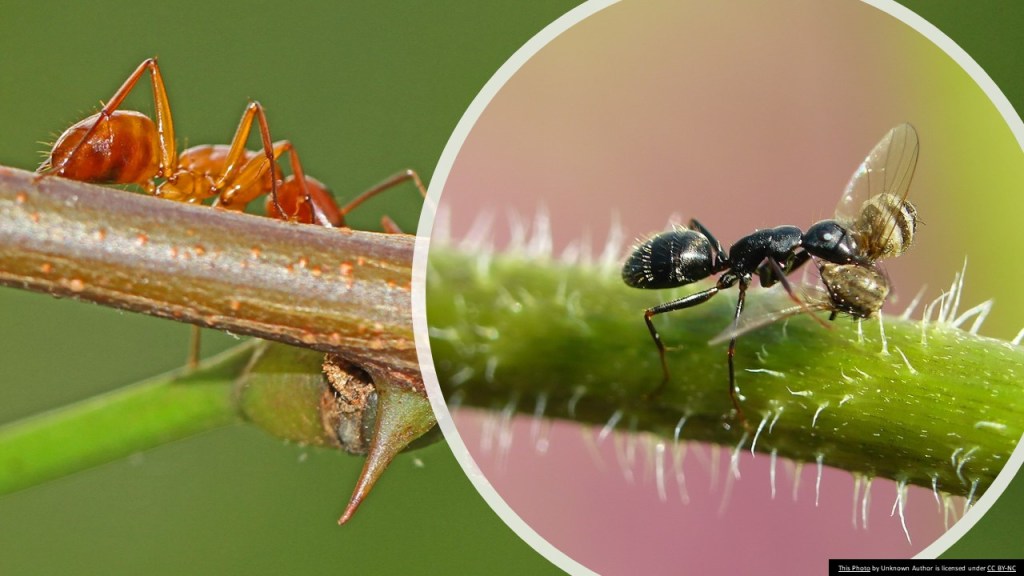
The Ants – Proverbs 30:25 “The ants are a people not strong, yet they prepare their food (meat) in the summer.” Ants speak of “the wisdom of preparation.” The Hebrew word for “Ants” (nemalah) means “to crowd together,” the root word means “to eat.”
A People
Ants are called “a people,” which is an interesting insight, as Ants live in a community, and have authorities which they obey, and their actions are regulated by certain definite laws.
Plan the Future
Ants teach us the lesson of the important of preparation. “Plan ahead” is what we learn from the Ants who overcome their lack of physical strength by starting their “food” preparation in the summer and setting aside enough to carry them through the winter.
Wisdom at Work
Ants, as insects (“a people”) are not strong (Proverbs 30:25a), as the Ants could be easily crushed; indeed, so weak, that thousands are crushed by one tread of the foot. Proverbs provides us the understanding and assurance that there is nothing wrong of not being strong, provided we are aware of the fact, and of finding solutions to our problems, by our abilities of foresight, followed by preparation, and thus, as wisdom taught by Ants – “Yet the Ants prepared their meat in summer” (Proverbs 30:25). Ants have the uncanny abilities to respond to different/changing situations; for example, Ants, in the cold countries, collect and fill their nests with straws, husks, not as stores to be consumed in the winter, but for warmth and comfort. What can we learn from the Ants?? – Ants have contingency plan to meet their needs before the problems occur.
The question is how can, Ants, such small insects, have such insight/foresight and abilities?? – God in His Sovereignty has given different abilities, to different insects/animals, the abilities of survival – thus, we humans can draw understanding and wisdom from our Creator (God) and His Creation, through seeking, observing, being aware and preparation. God gives the Ants the foresight – planning and hard work, to get ready for the tomorrows!
Organisation & Unity
Ants displayed the ability to carry huge loads above their size/weight; also, Ants’ ability to find food is uncanny. Yet how wise they are in preparing their food in the summer for the winter. Ants know that winter is coming, and they are willing, in summer, to prepare their stores of food for the time of scarcity. They do not only wish for food, but they work diligently to accomplish their goal of collecting and storing food. Thus, Ants demonstrate organisation and unity in function and purpose:
Ants laid up vast stores of provisions in their nests.
To facilitate this act of Providence, Ants placed their nests as near as possible to the food sources.
Ants certainly feed on the gathered provisions during the winter season.
Ants encouraged certain insects which secrete sweet juices to consort with them, and collect and store their eggs with their own, that Ants may have them at hand for future use when the eggs are hatched.
The Mind
Ants, are in some respects, the most wonderful insect in the world; for it seems to be about equal in intelligence to the elephant, which is not only the greatest, but also the most intelligent of the larger animals. The bull, so immensely greater than an Ant in body, is far small in mind.
The Application
Ants provided its food in the summer and gathered its food in the harvest. When the food gathered by the Ants become damp, they bring it out into the sun and dry it.
Ants have “no guide, overseer, or ruler,” and yet no one can watch this insect without seeing that they are “exceeding wise,” each Ant finds what his particular work is, and diligently does it – a profitable lesson for the Saints of God to learn. Tiny in frame, yet full of Providence, making wise provision against the winter.
Foresight & Preparation
The person who does not look forward and prepare for the day and the hour when some special demand will be made upon him, will surely go down. A wise provision made in the time of leisure or abundance is essential to outward and visible success. We must “buy up the opportunity (redeem the time – Colossians 4:5b); otherwise, when the occasion comes, we shall not be equal to the occasion.”
Patience
Ants, toil for the future. Herein is strength. Men who care only for the passing moment are shallow and weak. We are strong in proportion as we live in the future.










 Morning Dew . Life